.svg)
Mandatory E-invoicing and Digital Bookkeeping: What Does the Government’s Proposal Mean for Norwegian Businesses?
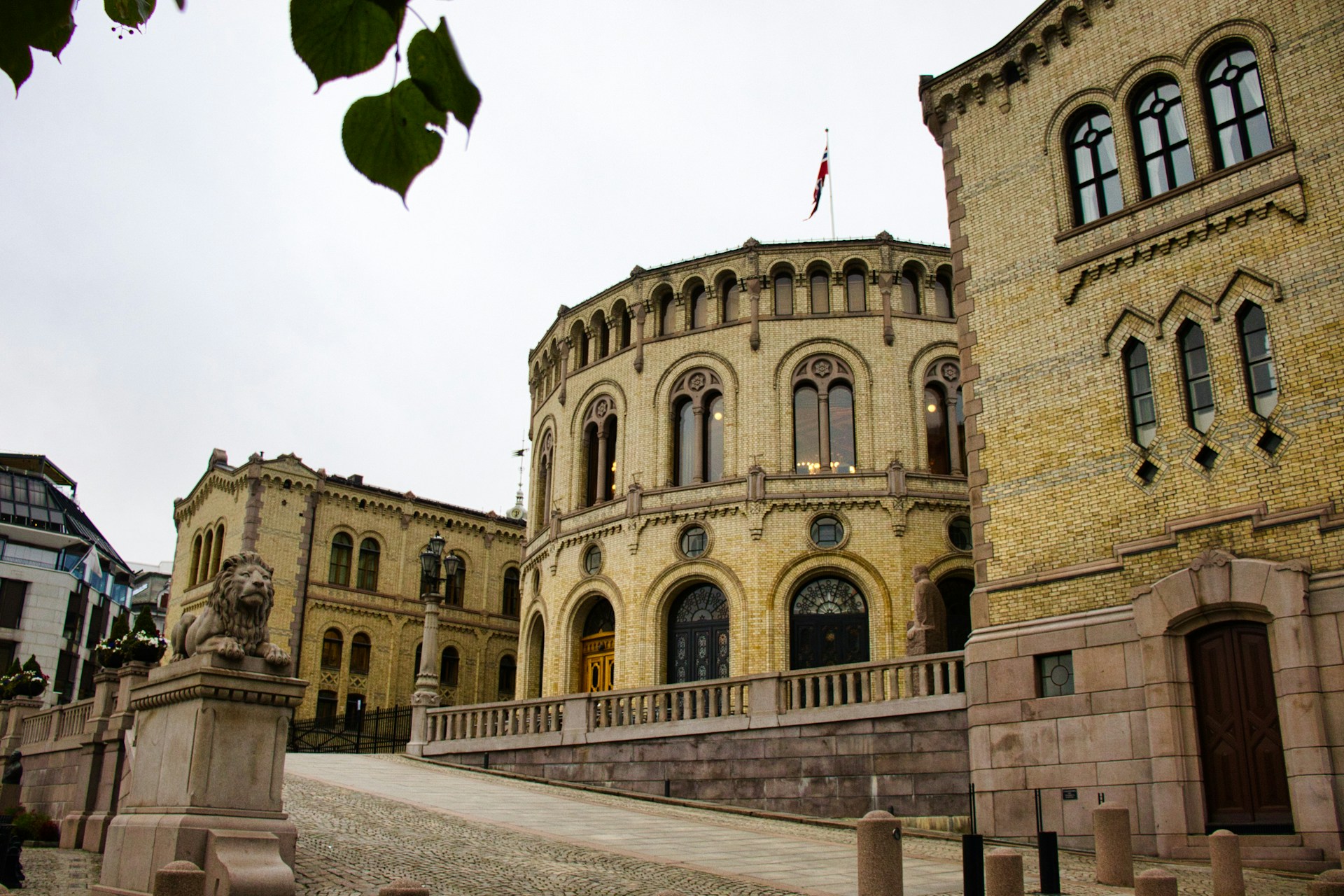


According to the Ministry of Finance, these measures will yield great benefits – an estimated NOK 10 billion saved for society over 20 years. The proposal, presented on March 16th 2026, entails a significant digital transformation for all entities in Norway subject to bookkeeping obligations.
Read the full press release from the Norwegian government here
The Government’s Proposal: E-invoices and Digital Bookkeeping to Become Mandatory
The bill means that all entities with a bookkeeping obligation must use electronic invoices and maintain accounts digitally within a few years. Specifically, companies must invoice each other with e-invoices by January 1st 2027, and have fully digitized bookkeeping by January 1st 2030. Digital bookkeeping entails using an electronic accounting system that can automatically receive and process e-invoices.
This accelerates the timeline – originally, a mandate for e-invoicing was proposed from 2028, but the high digital maturity of Norwegian businesses and a broad range of solutions make it possible to implement the requirement already in 2027. The proposal covers all entities subject to Norway’s Bookkeeping Act, meaning almost all types of enterprises (limited companies, sole proprietorships, associations, etc.), with the exception of very small entities (for example, sole proprietorships below certain revenue thresholds) which may receive exemptions or extensions. It is planned that Skattedirektoratet (the Norwegian Directorate of Taxes) will specify by regulation the approved invoice format (likely the EHF/Peppol standard) and any exceptions for small actors when the law is adopted.
Why Is the Government Doing This Now?
The rationale is twofold: On one hand, it should provide significant efficiency gains and simplify day-to-day operations for businesses. Prime Minister Jonas Gahr Støre points out that companies today still spend an unnecessarily large amount of time on administration and manual tasks – time that could instead be used for value creation. By digitizing invoicing and accounting processes, significant time and resources will be saved in the business sector. The Ministry of Finance estimates that automating invoice handling and accounting could yield around NOK 10 billion in total gains over 20 years, mainly in the form of time savings and increased productivity.
On the other hand, it’s about better control and less fraud. Electronic invoices leave digital traces that make it easier to track transactions and detect discrepancies, and the authorities will gain more precise and accessible information about companies’ revenues. This will make tax and duties audits more targeted and make financial crime such as invoice fraud and off-the-books sales more difficult.
Minister of Trade and Industry Cecilie Myrseth emphasizes that this is also part of the government’s simplification and modernization efforts: “It is necessary to use legal requirements to standardize and include everyone. The more companies that digitize, the greater the overall benefit – both for businesses and society,” says Myrseth. In other words, a legal mandate will ensure that all businesses adopt modern solutions, so that the full effect of digitization can be realized across the entire economy.
What Happens Next?
The bill will be considered by the Storting (Norwegian Parliament) during 2026. In parallel, the Ministry of Finance has asked Skattedirektoratet to prepare the necessary regulatory changes to implement the mandate. This includes defining an approved standard format for e-invoices (Norway is expected to use the EHF/Peppol BIS 3.0 format, which is already widely used) and establishing exemptions or transitional arrangements for small entities that may need more time. It is also being considered whether the mandate should be extended to other areas in the future – for example, e-invoices to consumers (B2C), digital cash receipts (e-receipts), and stricter regulation of accounting system providers. Skattedirektoratet will deliver a report on these possibilities by the end of 2026.
March 16th 2026: Bill Presented
The Government announces a proposal for mandatory e-invoicing (B2B) from 2027 and digital bookkeeping from 2030. The matter is sent to Stortinget for consideration, and Skattedirektoratet is tasked with drafting regulations (including invoice format and exemptions).
January 1st 2027: E-invoicing Mandate Takes Effect
From this date, all entities subject to bookkeeping rules must issue electronic invoices to other businesses. Paper invoices or PDFs will no longer be sufficient for B2B transactions.
January 1st 2030: Digital Bookkeeping Mandate Takes Effect
Companies’ accounts must now be kept in approved digital systems. The accounting system must, among other things, be able to automatically receive and process incoming e-invoices. This marks the completion of the transition to digital processes in accounting.
European Experiences: E-invoicing Becomes the Norm in Several Countries
Norway is joining a clear European trend. Several EU countries have already implemented or decided on similar mandates for electronic invoicing, with the aim of modernizing business practices and combating the shadow economy.
Here are a few brief examples from around Europe:
Italy:
Italy was the first in Europe to implement extensive e-invoicing. As early as 2014, Italy made e-invoices mandatory in public procurement (B2G), and starting in 2019, all domestic B2B and B2C invoices were required to be electronic through the state-run Sistema di Interscambio (SDI) platform. The results have been very positive – Italy has nearly halved its VAT gap (the difference between expected and actual VAT revenues) since e-invoicing was introduced.
The country reports significantly reduced VAT fraud and increased tax revenues, which also helped Italy qualify for the EU’s pandemic recovery packages. Italy’s success shows how e-invoicing can be an effective tool for combating tax evasion.
France:
France is in the process of rolling out a national e-invoicing mandate. The French authorities originally planned to start in 2024, but implementation was postponed a few years to ensure that both businesses and the government’s own systems are fully prepared. Now France is introducing e-invoicing in stages from 2026: From 1 September 2026, large companies must begin sending e-invoices and reporting sales electronically, and all businesses must be able to receive e-invoices by that date. Small and medium-sized enterprises have until 1 September 2027 to start issuing e-invoices (micro-enterprises likely have until 2028).
France’s model is built on a “platform ecosystem” where companies can either use the state portal (Portail Public de Facturation) or approved private platforms connected to the tax authorities’ system. The aim is to achieve real-time control of transactions and VAT, but the French authorities have chosen a gradual implementation up to 2027–2028 to give all stakeholders time to adapt.
Poland:
Poland has decided to make electronic invoicing mandatory through the new KSeF system (Krajowy System e-Faktur). From 1 February 2026, all large companies in Poland must use KSeF for issuing and receiving structured e-invoices, and during 2026 the requirement extends to other businesses. Small companies get a bit more time, but by 1 January 2027 even the smallest companies will be included. KSeF is a central government platform where all invoices are registered and assigned a unique ID number.
The aim of the reform is both better VAT control – Poland has obtained an exemption from EU rules specifically to introduce e-invoicing as a tool against VAT fraud – and greater efficiency in the business sector through standardization of invoice formats and automation of processes. Polish authorities also point to benefits for companies, such as faster VAT refunds when using KSeF (40 days instead of 60) and less need for paper archiving.
In Summary:
Norway is not alone – there is a digital revolution in invoicing across Europe. The experiences of pioneers like Italy show that mandatory e-invoicing can deliver concrete benefits in the form of reduced costs and less tax fraud. At the same time, some countries have opted for a gradual approach (e.g., France and Poland) to give businesses time to adapt and to ensure the technology is in place.
The EU has also encouraged this development; several countries have been allowed by the EU to deviate from normal VAT rules to pilot e-invoicing mandates as a way to close the “VAT gap” (the difference between expected and actually paid VAT). The trend is clear: electronic invoicing is becoming the new normal in B2B commerce across borders.
How Logiq Can Help Your Company Comply with the Requirements
The introduction of mandatory e-invoicing and digital bookkeeping may seem like a major transition, but with the right partner it doesn’t have to be complicated. Logiq is a leading player in digital document flow and is ready to help Norwegian companies through this transition. As a Nordic business network with global reach, Logiq offers fully managed services for Electronic Data Interchange (EDI) and e-invoicing. This means that we can take care of the technical setup and operation of e-invoicing solutions for your company, so you get a smooth integration with your existing financial systems and business processes.
Focus on Compliance:
Logiq ensures that your invoices always meet current laws and standards. Whether it’s Norwegian EHF invoices or international formats, Logiq keeps you updated and in compliance with all technical specifications and legal requirements. When Skattedirektoratet establishes an “approved invoice format” for Norway, Logiq will already support this format in full.
Efficient Sending and Receiving:
Through Logiq’s platform, your company can send and receive e-invoices to all your trading partners seamlessly. Logiq serves as a secure access to the Peppol network – the global network for electronic documents. We help you connect to Peppol so that you can exchange invoices electronically with customers and suppliers both in Norway and internationally. If you currently send invoices in another electronic format, Logiq can automatically convert these to the required format and deliver them via the appropriate channel (for example, via Peppol to recipients registered for EHF). Similarly, we can receive EHF invoices on your behalf and deliver them directly into your financial system. In this way, you not only meet the legal requirements, but also achieve a more streamlined invoicing process.
Integration with Accounting Systems:
The requirement for digital bookkeeping means that invoice data must flow into the accounts automatically. Logiq’s solutions facilitate exactly this. We offer integrations and APIs that connect our e-invoicing services with most ERP and accounting systems. Thus, incoming invoices can be processed by machine – without manual data entry – and outgoing invoices can be sent electronically directly from your billing system. This significantly reduces the risk of data entry errors and delays.
Ultimately, Logiq’s goal is to make the transition to e-invoicing and digital bookkeeping as easy as possible for your company. We have an experienced support team that can guide you through setup, testing, and go-live, so that you stay ahead of the deadlines. The transition to mandatory e-invoicing doesn’t have to mean an expensive IT project or a headache – by using a ready service like Logiq’s, you can “connect with confidence” to the digital ecosystem. This also frees up time for you to focus on your core business, precisely in line with what the government’s reform aims to achieve.
In Conclusion
The proposed shift to mandatory e-invoicing and digital bookkeeping represents a change that will affect all Norwegian businesses. Changes in legislation can be demanding, but they also bring enormous opportunities. Companies that prepare early and adopt modern solutions will not only avoid the stress of meeting new requirements, they will also reap the benefits in the form of more efficient operations, lower costs, and more secure control routines. Here, Logiq would be happy to be a partner along the way – we have the expertise and tools needed to make e-invoicing and digital bookkeeping a smooth success story for your company.
With the new requirements on the horizon, there is no doubt that electronic invoicing will soon become the new standard in Norway. Now it’s time to seize the opportunity: By digitizing your invoicing and accounting processes now, your company will be better prepared for the future, no matter what new requirements and opportunities it might bring. As the government and several European examples have shown, the gains from fully stepping into the digital economy are significant – both for individual companies and for society as a whole.
Thus, mandatory e-invoicing can be seen not just as a regulatory requirement, but as a positive initiative for a simpler, safer, and more efficient financial daily life for all of us.